Smarter Tools. Safer Teams. Stronger Results.
The skilled trades are at a crossroads. Demand for labor remains high, yet the supply of trained workers continues to shrink. Across industries like construction, manufacturing, and maintenance, companies are grappling with how to maintain productivity, safety, and quality—even as talent becomes harder to find.
But while the skilled labor shortage isn’t going away, employers are finding new ways to close the gap—and technology is leading the way. Innovative tools and platforms are transforming how work gets done in the trades. These advances are helping employers do more with leaner teams, create safer job sites, and train new workers faster and more effectively.
Here are five of the most impactful tech innovations shaping the skilled trades today—and how companies partnering with Cardinal Staffing are staying ahead of the curve.
1. Building Information Modeling (BIM)
BIM is much more than a design tool—it’s a collaborative platform that’s changing how entire projects are planned and executed. By creating a digital twin of a physical structure, BIM allows architects, engineers, and skilled trades teams to:
- Visualize and coordinate all project elements in one shared model
- Identify conflicts or errors before construction begins
- Improve sequencing, reduce waste, and avoid costly rework
In skilled trades, BIM enables electricians, HVAC techs, and other tradespeople to work more precisely and in harmony with other disciplines. Projects run smoother, and skilled labor is used more efficiently.
2. Robotics and Automation
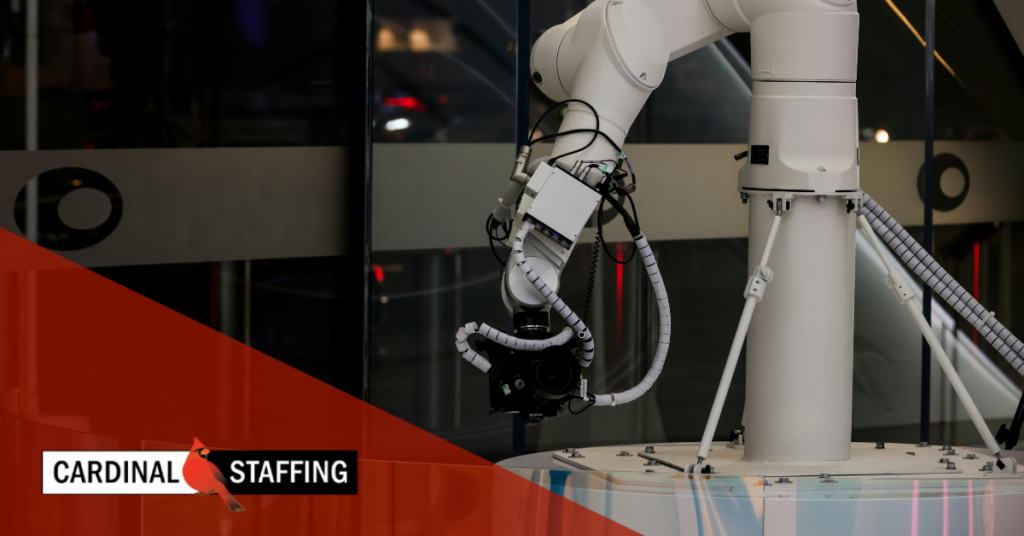
Robotics and automation are no longer futuristic—they’re here, and they’re working alongside human crews across the trades. From robotic welders in manufacturing to automated bricklaying systems on construction sites, companies are using machines to:
- Handle repetitive or physically demanding tasks
- Improve precision and consistency
- Reduce injuries and job site fatigue
Automation doesn’t eliminate the need for skilled workers—but it does augment their productivity, allowing fewer people to do more without sacrificing quality.
3. Wearable Technology
Smart helmets, augmented safety vests, and exoskeletons are giving workers—and employers—an edge in both safety and efficiency. Here’s how wearables are being used:
- Smart helmets provide real-time alerts on environmental hazards, navigation support, and communication with supervisors
- Exoskeletons reduce strain when lifting, bending, or standing for long periods, especially in roles like assembly or material handling
- GPS and biometric monitors help track fatigue, heat stress, and other risks before incidents occur
For employers, this tech isn’t just about innovation—it’s about risk reduction, insurance savings, and worker retention.
4. Augmented Reality (AR)
AR is being integrated into training, fieldwork, and inspections across multiple trades. Workers can now view overlays of blueprints, instructions, or alerts through smart glasses or tablets—while still engaging with their physical environment.
Benefits include:
- Real-time visual instruction on complex installations or repairs
- Faster onboarding of new employees through hands-on guidance
- Reduced downtime due to fewer errors or misunderstandings
When applied properly, AR shortens the learning curve for less experienced workers and enhances performance for seasoned tradespeople.
5. Advanced Project Management Software
Today’s job sites are complex, with multiple subcontractors, suppliers, and phases running in tandem. That’s where modern project management platforms come in.
The latest software helps teams:
- Coordinate labor scheduling, supply chain logistics, and compliance documentation
- Track productivity, safety metrics, and deadlines in real time
- Communicate more effectively across departments and locations
These tools are essential for scaling operations—especially when skilled labor is in short supply.
How Cardinal Staffing Helps You Stay Ahead
At Cardinal Staffing, we don’t just fill roles—we help our clients adapt to workforce shifts, including the growing intersection of skilled labor and emerging technology. We support clients in several key ways:
- Sourcing talent with tech-savvy mindsets: We look for adaptable candidates who are eager to learn and work with new tools.
- Temp-to-hire flexibility: As tech evolves, you can evaluate workers on the job before making a long-term commitment.
- Education and upskilling partnerships: We help employers identify candidates ready to grow with evolving job demands.
- Onsite workforce planning: For large or multi-phase projects, we collaborate directly with your managers to ensure staffing aligns with equipment, schedules, and site requirements.
Ready to Build a More Future-Ready Workforce?
Whether you’re exploring automation or simply trying to keep up with demand, the key to progress is pairing innovation with the right people. Cardinal Staffing helps manufacturers, construction firms, and logistics companies across the Midwest find the skilled trades talent they need to operate smarter—not just harder.
Let’s talk about how we can help you close the skilled trades gap—with technology, strategy, and people who are ready to lead. Request qualified workers today and start building your future workforce—now.